1 TYPES OF HUMIDITY IN YOUR HOME
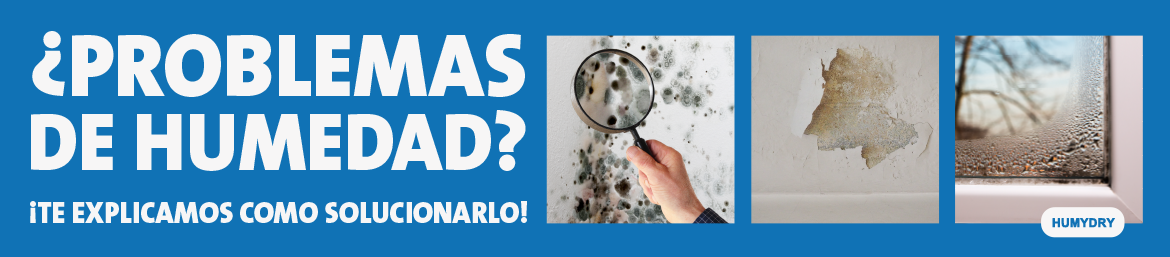
Humidity in your home can cause health problems and lead to significant repair bills. You can stop moisture problems from appearing easily and economically. To start, you should identify the source of the problem and what type of humidity you have.
1.1 HUMIDITY FROM CONDENSATION
Condensation forms when you have excess ambient humidity in your home. Warm air can absorb and retain more moisture. When moisture-laden air comes in contact with cold surfaces (walls, corners, window frames, glass, etc.), the water vapor in the air condenses. It changes from a gas to a liquid. It becomes water. The symptoms of this are easy to identify. Surfaces with condensation are covered in water droplets and/or are damp to the touch. Condensation usually happens at night when the outside temperature drops and your windows and walls cool.
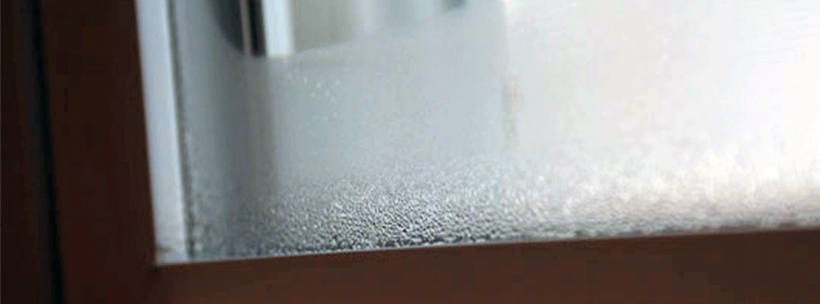
The main cause of condensation is excess humidity in the air. Just the breathing of people living in a house can cause excess ambient humidity. Activities like showering, cooking and hanging clothes to dry—even having houseplants—also generate a lot of ambient moisture. Outdoor humidity can also affect the moisture level of the air in your home.
These are some of the problems moisture from condensation can cause:
- Mold and mildew on any surface
- Stains on walls and peeling paint
- Unpleasant musty odors
- Allergies and respiratory problems
- Damp clothes and household fabrics
- Corrosion and rust of metal objects
- High energy costs
1.2 HUMIDITY FROM SEEPAGE
Humidity from seepage is caused by deficient home insulation or the deterioration of walls, which allows humidity to enter your home from the outside. Seepage dampness appears primarily in humid areas and in rainy seasons. Houses that are not waterproofed are more vulnerable to seepage.
This problem appears slowly. The moisture seeps through bricks, tiles and different building materials until it reaches the inside of the house. By the time you notice the dampness, it may already be too late. The problem may already be inside your home. Some indications of seepage include droplets on your ceiling and black spots or mold appearing in corners.
Seepage can also happen when there's flooding, when pipes burst, or when you have a leak.
1.3 CAPILLARY MOISTURE
The ground your home is built on, the construction materials used to build your house and the time of the year are all important factors in capillary moisture. Capillary moisture is more common in humid and rainy seasons, although it can happen year round without interruption.
Capillary moisture occurs when water enters through your home’s subfloor. Moisture rises gradually until it reaches your home’s walls. Old, poorly insulated houses and houses built with permeable or porous materials on damp ground are particularly susceptible to rising moisture.
How much humidity reaches your home depends on the level of moisture in the soil and the porosity of your walls, which will seem wet and damp to the touch. Another clear sign of rising damp is the appearance of mold on your floors.
2. OTHER FACTORS
2.1 FLOODING
In general, there are two types of flooding: flooding caused by the weather and flooding caused by a rupture or leak in a pipe in your home or a neighbor’s home.
In both cases you should act as quickly as possible if water enters your home or if it filters through your walls or ceiling. You should try to eliminate the water inside your home as quickly as possible and air out the affected area. This will help to dry out your home and prevent the appearance of mold, unpleasant odors and other problems.
2.2 AMBIENT HUMIDITY
Your home’s humidity level is also related to the climate where you live. Homes in coastal areas and areas with tropical climates tend to have more ambient humidity. In winter and summer this is more noticeable, when the humidity accentuates the feeling of cold or heat. This also makes it harder to prevent condensation problems, although you can minimize the problem with good insulation, daily ventilation and products that absorb excess humidity. Air conditioning and heating can also help you to reduce environmental humidity, although a house with high humidity is more difficult to cool and heat which means higher electricity costs.
3. MOST COMMON HUMIDITY PROBLEMS
3.1 BLACK STAINS OR SPOTS
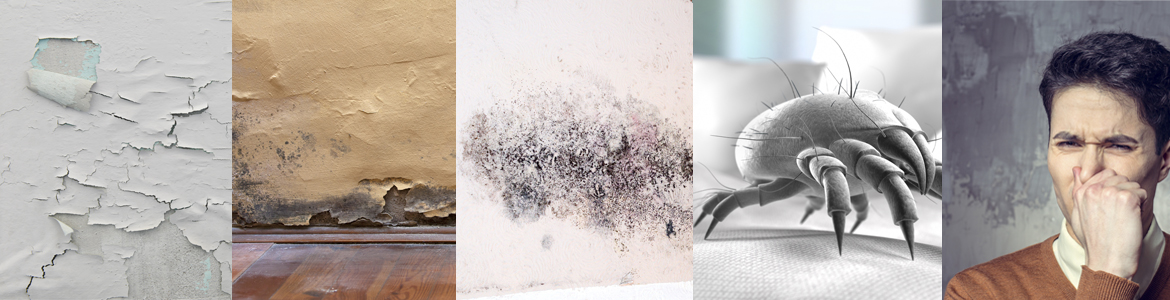
The primary requirement for black spots to appear is humidity. They can appear in any place and on any surface: food, natural or synthetic fabrics, wood, plaster, metals, etc. They appear in humid places that don’t get a lot of light.
3.2 MITES AND FUNGI
In addition to favoring the appearance of mold, humid environments and low light also favor the appearance of other fungi and mites. These organisms litter our walls, can spoil our belongings, and create an unhealthy environment. In addition, as we will see later, they are the origin of multiple allergies and respiratory problems.
3.3 MUSTY ODOR
Some parts of the home are more prone to musty odors, places that are closed off and used infrequently with poor ventilation such as basements, garages, storage rooms, closets, drawers, etc. These are usually also the first places where mold, rust or damp spots appear.
Clothes and fabrics kept in closets and drawers also absorb the musty smell. Eliminating the source of humidity (usually simply excess ambient humidity) will save you a lot of trouble.
Clothes and fabrics kept in closets and drawers also absorb the musty smell. Eliminating the source of humidity (usually simply excess ambient humidity) will save you a lot of trouble.
3.4 GENERAL DETERIORATION OF YOUR HOME
Mold and damp stains are the most common physical and visible sign of humidity problems. But your home can also have a long list of other problems: peeling paint, damp bedding, rotting wooden furniture, rusting metals, yellowing books and paper, deteriorating stamp collections, etc.
In addition to creating mold and stains that attack fabrics and walls, high humidity levels also cause paint to peel, wooden furniture to mildew and deteriorate, metals to rust, etc. Failing to control the humidity levels may lead to significant repair costs and damage the quality of your belongings and furnishings.
3.5 HEALTH PROBLEMS
In addition to physical damage to your home, dampness is also very harmful to the health of those who live in your home, especially if they are susceptible to respiratory problems, like infants, the elderly, and people with allergies. As mentioned above, excess humidity causes the appearance of mold, fungi and dust mites. These can be very harmful to people with respiratory conditions like asthma and people with allergies. People with asthma or allergies also report suffering more from these conditions in humid environments.
3.6 HIGHER ENERGY COSTS
Higher humidity makes heating or cooling your home more difficult. Using the air conditioning in summer to reduce discomfort from excess humidity and turning up the heat in winter translates to higher electricity bills and greater expense because it takes more energy to heat or cool damp air. Simply put, moist air has more particles that need to be heated or cooled.
But this doesn’t mean you should have dry air either. You need a certain amount of ambient humidity to feel comfortable and to avoid having a dry throat or dry eyes, for example. The optimum humidity level for your home is between 40 and 50%.
4. SOLUTIONS FOR HUMIDITY PROBLEMS
As mentioned above, the most common type of humidity is humidity from condensation. Moisture from filtration and capillary action are generally caused by specific problems (leaks, rupture, flooding, etc.) or structural problems that require major work to tackle the root of the issue. What's more, moisture from seepage and capillary action also creates ambient moisture, which condenses and causes other moisture. But you can prevent excess humidity from condensation with a few practical tips. Remember if the humidity level in your home is optimal, between 40 and 50%, it’s very unlikely you will have condensation problems. So your goal should be to eliminate excess moisture in the air. Here are some tips to help you do this easily.
- Ventilate well: Good ventilation allows fresh air to circulate, which prevents humidity from accumulating. Ventilate for about ten minutes in the morning when the sun is out, which is when the outside air has the least humidity. If you have humidity problems in your closets or drawers, open them when you ventilate so they also get fresh air.
- Use exhaust fans: Daily activities like cooking and showering generate a lot of ambient humidity. Use the extractor hood when boiling water, and, if your bathroom doesn’t have an extractor or fan, open the window a little when showering to allow steam to escape and keep everything from getting damp.
- Hang clothes outside: Even if you don’t have a lot of space or if accessing the roof of you apartment building is difficult, always try to hang your laundry to dry outside your home. Clothes just out of the washing machine contain a lot of moisture that will be released directly into your home. Another option is to use a dryer if you have one.
- Use products that absorb excess humidity. People live in their homes, and some spaces are difficult to ventilate, so there will always be excess ambient humidity that can lead to condensation problems. In addition to the recommendations above, we strongly recommend you use moisture absorbers that continuously absorb excess ambient humidity. That means using professional products and avoiding home remedies like containers filled with rice or putting chalk in your cabinets. Those remedies are hopelessly ineffective compared to the efficiency of professional moisture absorbing products.
5. WHICH MOISTURE CONTROL PRODUCT SHOULD I USE?
Take the following information into consideration when selecting the best solution for your humidity problem.
- Remember that most humidity problems are caused by condensation.
- The best treatment is not always the most expensive one.
- The most efficient solution to humidity from condensation is not major refurbishment or renovation.
- Make sure the solution isn’t more expensive than the problem itself.
Now let’s take a look at the three types of humidity solutions on the market.
- HVAC (heating, ventilation and air conditioning): Some companies promise miracle solutions in exchange for thousands of dollars, and you end up with heat registers and vent grilles all over your house. But do they work? Look online for reliable reviews of these companies.
- Electric dehumidifiers: These products collect excess humidity from the environment using a fan and coil that condenses vapor into water. These devices use a lot of electricity, are noisy and require the water they collect to be emptied out from time to time.
- Calcium chloride: These moisture control products work without electricity. Calcium chloride is an active ingredient that absorbs excess ambient humidity, transforming it into a brine (water and salt), which collects in the product's reservoir. They do not make noise or consume electricity. They work continuously and can be refilled.
6. HUMYDRY® MOISTURE CONTROL PRODUCTS
HUMYDRY® has manufactured and sold products to tackle humidity problems for over 30 years. Today HUMYDRY® products are found in more than 50 countries around the world. HUMYDRY® moisture solutions are the leaders in many of these countries.

6.1 HOW DO HUMYDRY MOISTURE CONTROL PRODUCTS WORK?
Our non-electrical moisture control products use calcium chloride and work from the moment they come into contact with the air. Their job is to absorb excess humidity and maintain it at the optimum level (between 40% and 50%). HUMYDRY® products operate silently and without electricity, so they consume no energy.
The primary active component of our moisture absorber units is calcium chloride. It’s a desiccant with a chemical composition that attracts water molecules in the air and turns them into liquid water, continuously reducing the ambient humidity level.
HUMYDRY® moisture control products have calcium chloride in granular or tablet form. Both formats work equally well. They activate automatically when there is excess ambient humidity and stop absorbing ambient moisture when the optimum humidity level is attained, which prevents the air from becoming excessively dry. The calcium chloride refills in bag or tablet form are placed on the unit's filter and start working immediately. In a few days, you’ll see the unit’s reservoir begin to fill with liquid absorbed from the air. When the calcium chloride tablet or granules in the bag are used up, just empty the reservoir and put in a refill. Refills are inexpensive and continuously remove humidity from the air. Make sure to use the right refill for the product you’re using. All HUMYDRY® products are labeled with the weight of the calcium chloride refill for easy identification.
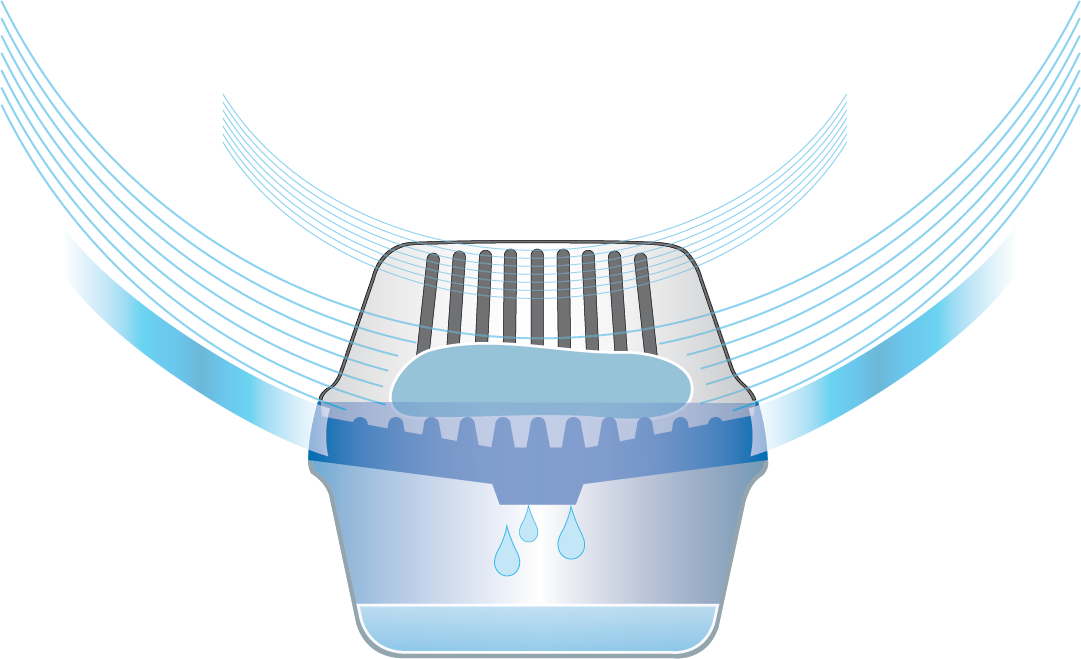
HUMYDRY® moisture control products with calcium chloride do not emit any substances into the environment. They are completely safe to use, although we recommend placing them in a space protected from possible spillage. You can place the unit under a bed or a piece of furniture, behind a door, on the top shelf of a closet or bookshelf, etc.
HUMYDRY® products are conceived and designed to eliminate humidity from any space in your home. You should select the correct product based on the surface area of the space you want to treat. We recommend the following products based on the size of the area to treat:
- Large spaces of up to 400 square feet: 1-kilogram moisture absorbers, refillable with refills of 1 kilogram or less.
- Medium spaces of up to 200 square feet: 450-gram moisture absorbers, refillable with 450-gram refills or 500-gram tablets.
- Small spaces of up to 100 square feet: 250-gram moisture absorbers, refillable with 250-gram refills only.
- Small spaces: 75-gram moisture absorbers, refillable with 75-gram refills only.
Many HUMYDRY® moisture control products and refills serve two functions: They act as a moisture absorber and as an air freshener. Some of the scents available for products in our moisture absorber range include lavender, apple, lemon and peach.
6.2 SOLUTIONS FOR ANY SPACE WITH HUMIDITY PROBLEMS
- Bathrooms: Prevents the appearance of mold and damp stains from condensation. Stops mirrors from rusting. Highly recommended for bathrooms without windows or exhaust fans. See recommended products for bathrooms.
- Bedrooms and other rooms: Maintains a healthy environment in the room. Prevents the appearance of mold stains and musty odors. Hinders the reproduction of mites.
- Closets and shoe storage: Reduces and controls humidity in poorly ventilated spaces. Prevents the appearance of mildew. Protects clothes from musty odors.
- Boxes and drawers: Prevents the appearance of mold. Stops clothes, books, documents and other items in small, poorly ventilated spaces from being damaged by humidity.
- Walls: Prevents paint from peeling and mildew from appearing in corners, walls or ceilings.
- Kitchen: Reduces ambient humidity. Prevents condensation problems. Protects home appliances.
- Living room: Prevent deterioration of furniture and household fabrics. Maintains the optimum humidity level in your living room.
- Basements and garages: Prevents damage to walls. Protects tools and other belongings from corrosion, mold, rust, etc.
- Cars and mobile homes: Prevents musty odors. Protects vehicle structure and components from problems caused by condensation (mold, rust, corrosion, etc.).
- Boats: Boats are in constant contact with water. In the winter, when they're closed up for months on end, boats need special protection because, as they're subject to continuous humidity, condensation problems are commonplace. Poorly ventilated, damp spaces are an ideal environment for mold and mildew.
Find the ideal product for your needs in our online store WWW.HUMYDRY.US Try HUMYDRY® moisture control products. Have any questions about using HUMYDRY® moisture control products? Have a look at our FAQs. Consulta nuestras “Preguntas frecuentes” pulsando aquí.